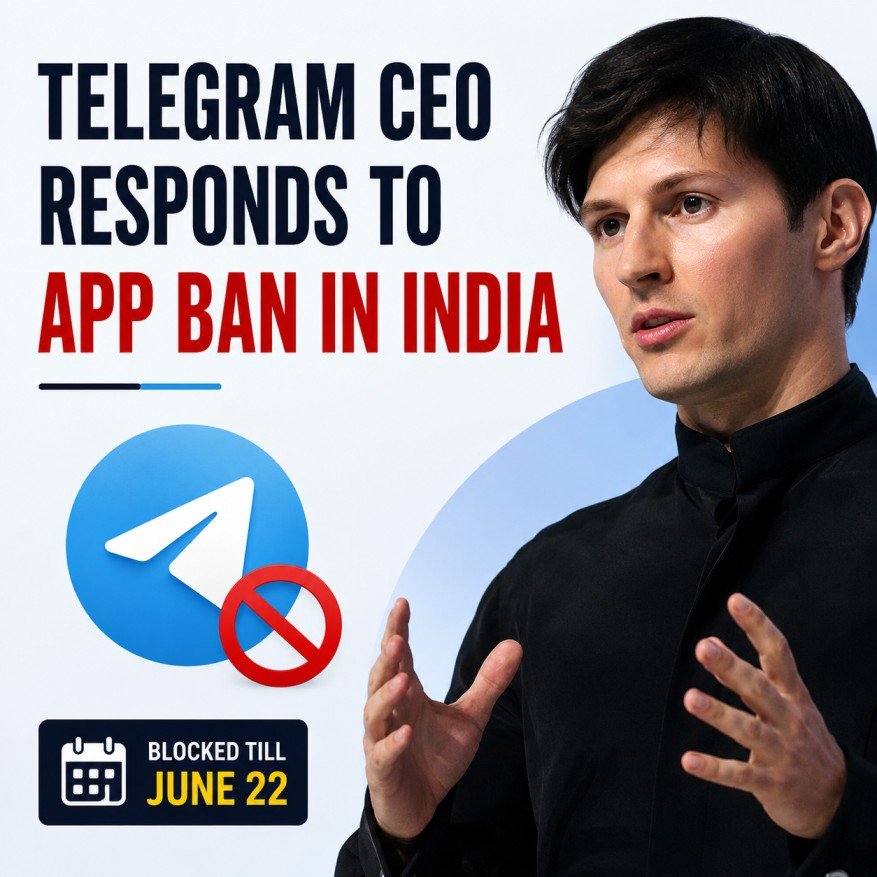
Telegram CEO Pavel Durov has publicly criticised the Indian government’s temporary ban on Telegram, imposed ahead of the NEET-UG 2026 re-examination. The restriction was introduced after concerns that leaked exam materials were being circulated through the messaging platform, raising questions about the fairness and security of the national medical entrance examination.
Responding to the decision, Durov argued that banning Telegram would not solve the root problem behind paper leaks. According to him, the individuals responsible for distributing confidential exam content can simply shift their activities to other digital platforms, making the ban ineffective in preventing future leaks.
Durov stated that the move primarily affects ordinary users who rely on Telegram for communication, education, business, and community activities. He suggested that authorities should focus on identifying and punishing the actual perpetrators behind the leaks rather than restricting access for millions of regular users.
The Telegram chief further claimed that the platform itself is not responsible for the actions of a small number of users who misuse digital communication tools. He emphasised that technological platforms can cooperate with investigations, but broader bans may not be the most effective solution.
The controversy comes amid heightened scrutiny of examination security in India. Authorities have been working to prevent the spread of leaked question papers and other sensitive material following concerns about the integrity of competitive examinations.
Government agencies maintain that strict measures are necessary to protect the credibility of national exams and ensure equal opportunities for all candidates. Officials believe that temporary restrictions can help curb the rapid circulation of leaked content during critical examination periods.
Telegram has remained one of the most widely used messaging platforms in India, with millions of users relying on it for personal communication, educational groups, and professional networking. Any disruption to the service affects a large user base across the country.
The temporary ban is expected to remain in place until June 22, after which authorities will review the situation. The debate has sparked wider discussions about digital freedom, platform accountability, cybersecurity, and the most effective ways to combat exam-related misconduct in the digital age.
https://play.google.com/store/apps/details?id=com.cs.rashtrapulse
#Telegram #NEET2026 #RashtraPulse