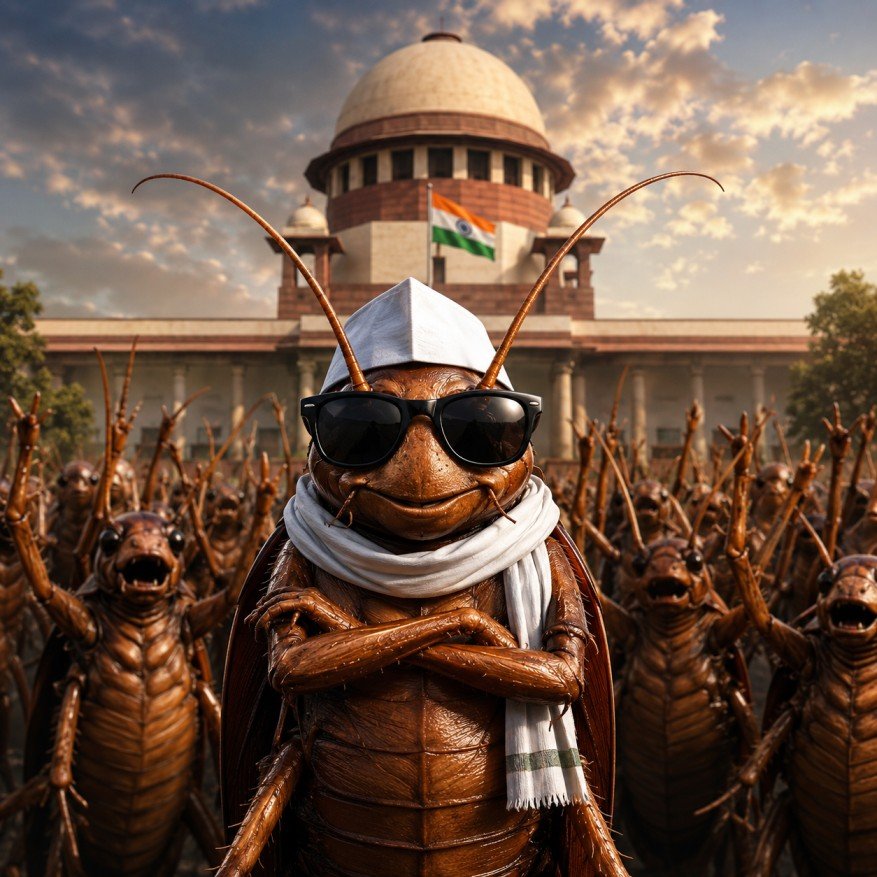
The satirical online movement known as the Cockroach Janta Party (CJP) has rapidly gained national attention after reportedly crossing 20 million followers across digital platforms amid an ongoing controversy linked to remarks allegedly made by India’s Chief Justice. The group, founded by Abhijeet Dipke, emerged as a parody movement but has now turned into one of the most discussed topics on Indian social media.
The controversy began after remarks reportedly comparing unemployed youth to cockroaches triggered criticism and widespread online debate. Although clarification was later issued stating that the comments were aimed at people with “fake and bogus degrees” rather than Indian youth in general, the incident had already sparked outrage and satire online.
Following the backlash, Abhijeet Dipke, an Indian student studying at Boston University in the United States, launched the Cockroach Janta Party as a satirical response. The movement quickly went viral, attracting millions of followers and widespread participation from young social media users frustrated over unemployment, education, and political discourse.
Reports later emerged that the party’s official website had become inaccessible within India and appeared to be offline globally as well. Dipke claimed on social media platform X that authorities had “taken down” the website and sarcastically questioned why officials were “so scared of cockroaches.”
Despite the reported takedown, Dipke stated that the movement was already working on a new digital platform and insisted that the campaign would continue. His social media posts, including the statement “Cockroaches never die,” were widely shared online and became viral slogans among supporters.
The incident has now evolved into a larger national conversation around digital censorship, satire, online activism, freedom of speech, and youth frustration in India. Supporters of the movement argue that the popularity of the Cockroach Janta Party reflects growing dissatisfaction among young citizens over unemployment and governance issues, while critics believe the controversy has been unnecessarily politicized.
Legal experts, activists, and social media commentators have also debated whether online satire movements should face restrictions or be protected as a form of democratic expression. The issue continues to trend across platforms, making the Cockroach Janta Party one of the most talked-about digital phenomena in recent weeks.